On International Women’s Day 2025, let’s honor women with disabilities who rise above challenges, life each other up, and change the world.
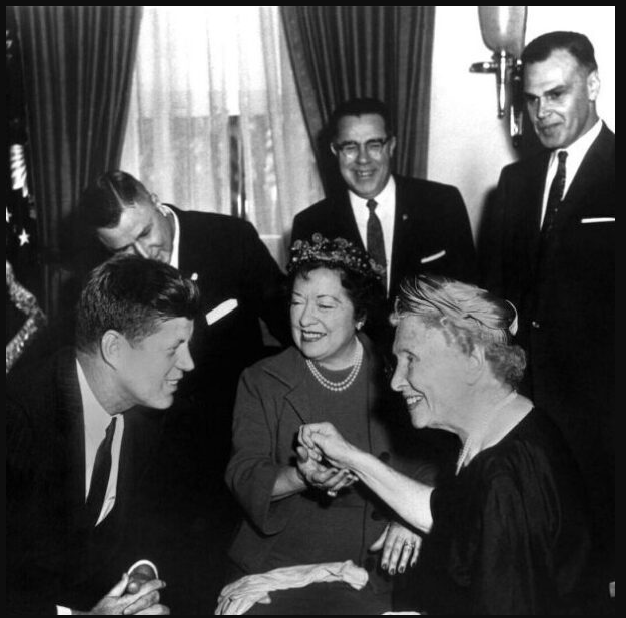
Growing up, my childhood hero was Helen Keller. Her story of resilience in the face of what seemed like insurmountable challenges captivated me. Deaf and blind, Helen’s ability to break through the silence and darkness of her world to become a renowned author, speaker, and advocate was nothing short of extraordinary. But her success wasn’t achieved alone—it was made possible through the unwavering dedication of Anne Sullivan, her teacher and lifelong mentor.
Anne Sullivan understood something that the world at the time did not: Helen wasn’t incapable—she needed someone to show her the way. That belief changed the course of Helen’s life and, in turn, changed history. Their story taught me an invaluable lesson: Disability does not define potential. With the right support, guidance, and belief, individuals can rise above even the most profound challenges.
Deafblindness
Helen Keller would have been classified today as Deaf-Blind, a disability category that is not just the sum of deafness and blindness but an exponentially different way of experiencing the world.
According to the National Center on Deafblindness, the combination of varying degrees of vision and hearing loss “significantly impacts a child’s ability to access information, communicate, and interact with other people. It has profound implications for education services.” To improve life outcomes, early intervention is critical.
Deafblindness is a very rare disability condition. In my 10+ years of working as an educational diagnostician, I encountered only one child who was deafblind. Actually, at the time he was on my caseload, he was identified with a Visual Impairment and Auditory Impairment. Through a thorough and highly-individualized reevaluation, through which I sought support through my local regional services center, we were able to get him correctly identified as Deafblind. This was done so that he would be counted in the state’s registry and open him up to receive more services and supports, especially as he transitions to adulthood.
In Helen Keller’s childhood which took place in the 1880s, little was understood about the complexities of this condition. It took the intervention of Anne Sullivan, and a persistence and resilience that she found for herself through managing her own disability condition of poor eyesight, that it was possible to break through to Helen and create that spark of learning.
Visiting Ivy Green and the Birthplace of Helen Keller
Some years ago, at the beginning of my teaching career, my daughter and a friend of mine went to Tuscumbia, Alabama, which is where the Keller family lived. We stayed in a local hotel and visited the Keller home on Ivy Green which has been turned into a museum and education center.
The home retains its historic Southern architecture, and the grounds are meticulously maintained. We were able to touch the water pump itself, where Helen first made the connection between the object and the letters that Anne was finger-spelling into Helen’s hand. The result was learning, and it opened Helen’s mind, and it was life-changing. “Water” was Helen’s first word at age 6. There was something profound about standing in that very spot, touching the water pump, and knowing that the miracle had unfolded right there.
The Miracle Worker
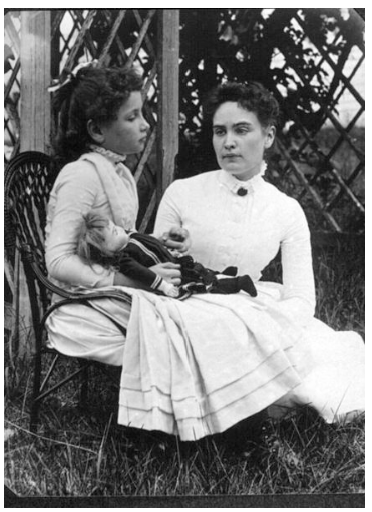
Every year on certain dates, Ivy Green puts on the play “The Miracle Worker”. If you are to ever visit Ivy Green, be sure to visit during these summer dates when they put on the performance. Despite having read biographies on Helen Keller and Anne Sullivan and knowing the story through and through, Ivy Green does an incredible job of portraying Helen and Anne and their initial struggles and the eventual breakthrough. It’s truly a magical experience: watching the play unfold before you as you sit on stadium bleachers on a warm Alabama night, one that stays with you forever.
(But it you can’t make it out to Ivy Green to see the play, you can watch The Miracle Worker (1962) which won two Academy Awards and was based on the Pulitzer-prize winning play of the same name produced by William Gibson in 1959. Source link here)
Helen’s Journey into Activism
Helen went on to become a writer, speaker, and activist for individuals with blindness, becoming one of the first to speak and write on the subject. At the time, the topic of blindness had been quite taboo, as blindness was often associated with an outcome of untreated venereal disease. In working together with other civil rights activists, Helen helped to co-found the American Civil Liberties Union in 1920.
Because of her activism, the deaf and blind, who had typically been institutionalized due to their disabilities, began to receive more recognition and support as education and awareness about their conditions grew.
International Women’s Day 2025
On International Women’s Day, I reflect not only on Helen and Anne’s impact on the world for individuals with disabilities, but also on the broader struggle of women—especially women with disabilities—who have had to fight for recognition, rights, and opportunities.
Throughout history, women have had to prove their worth, their intelligence, and their capabilities in ways that others have never had to. For women with disabilities, these challenges are even greater. But like Helen Keller, we continue to rise, proving that strength is not measured by what you lack, but by what you refuse to let hold you back.
Today, let’s celebrate the power of perseverance, the power of education, and the power of women who lift each other up. Because when we do, we don’t just change individual lives—we change the world.

 Mindful Advocacy
Leave a comment